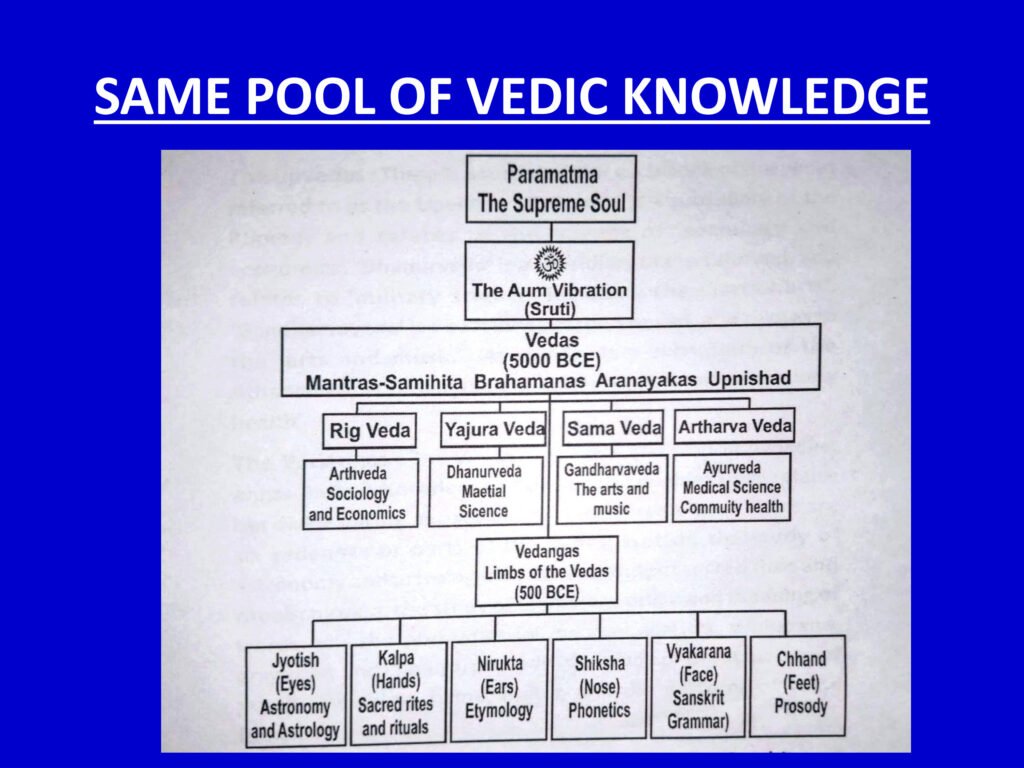
Ayurveda is rooted in the Vedas which are the oldest scripture of the world. Ayurveda is Upveda subsidiary knowledge of Atharvaveda which details about personal health, healing and longevity and management of the community health. While it began as an oral tradition within the Vedic framework, it eventually developed into a highly structured system of medicine documented in classical text like the Chakra Samhita and Sushruta Samhita. The slide below depicts the schematic arrangement of Vaidik knowledge system.
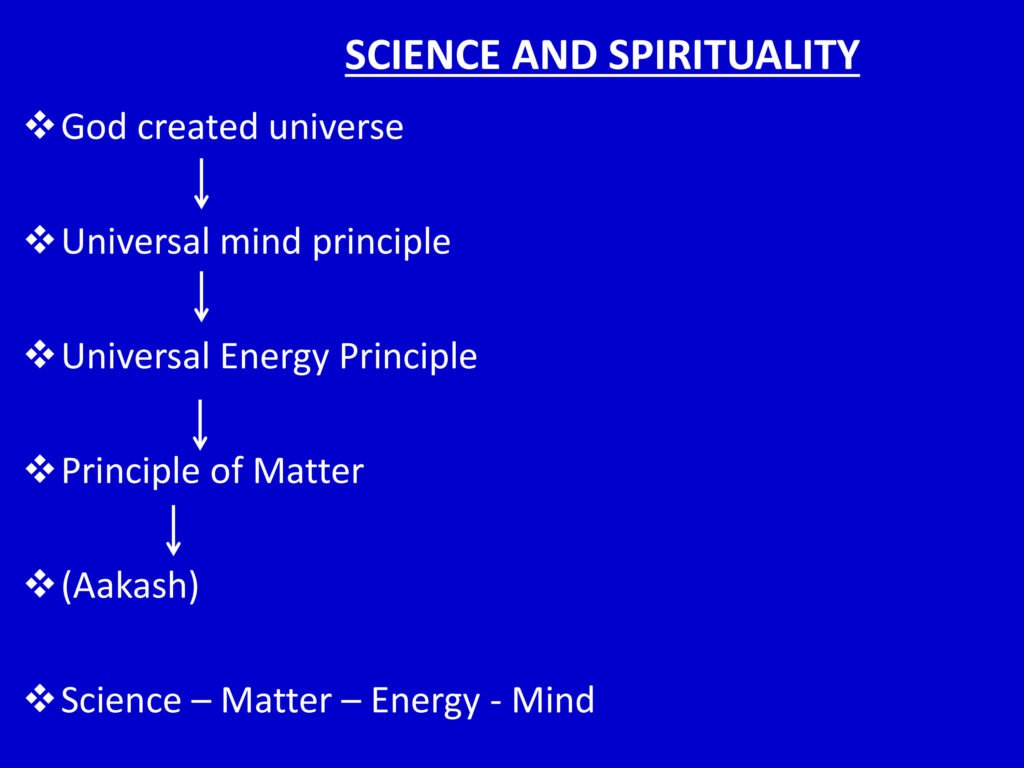
Creation of universe started with sound from which the matter (universe material) was created. Science and Indian spirituality deal with the same three factors of creation i.e. mind, energy and matter but in different orders as shown in the slide below.
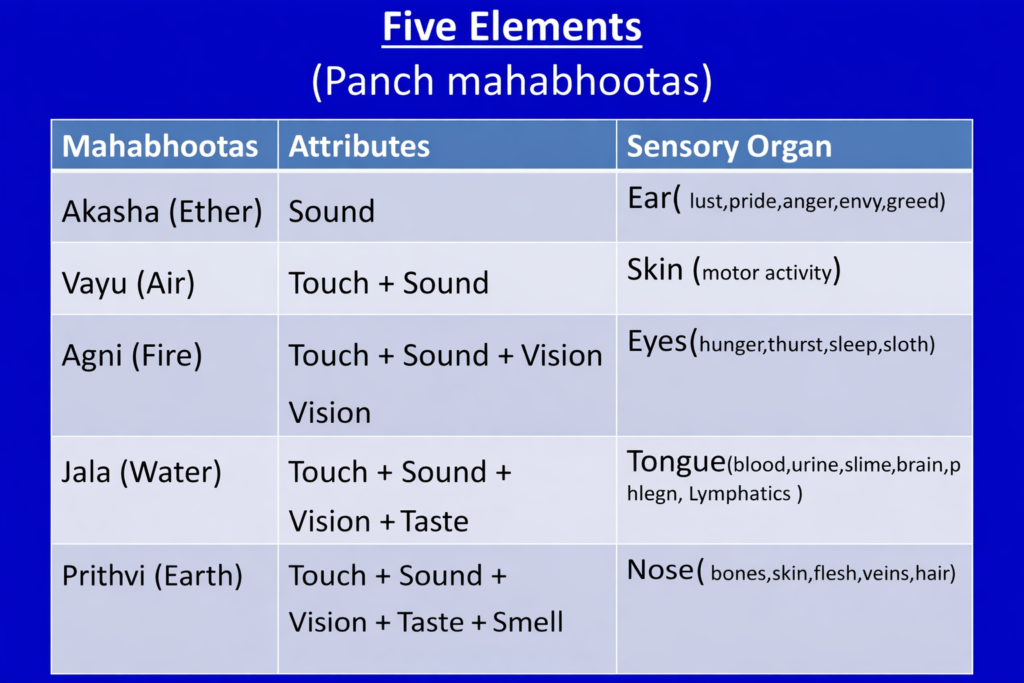
The whole universe as per Ayurveda is created by the five material elements created one after the other in the order as shown in the slide.
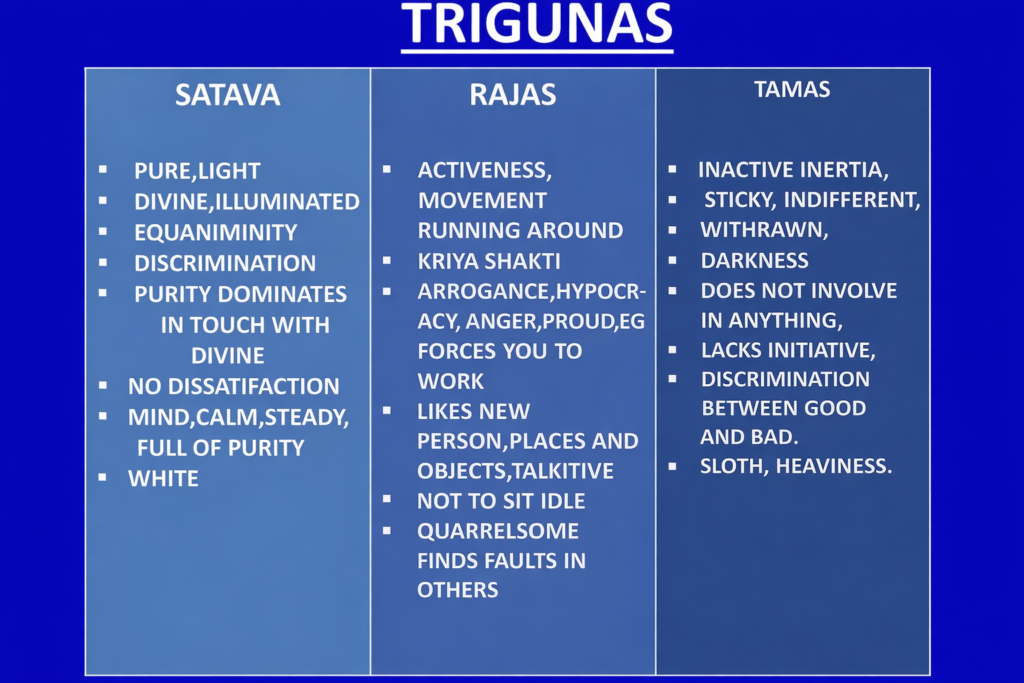
The five basic elements shown in the above slide are of inert nature. They are activated by three Gunas (three attributes) shown below. The various ratio in which Satva, Rajas and Tamas are mixed and admixed to activate the basic elements of a body (person) forms its nature (Prakirti).
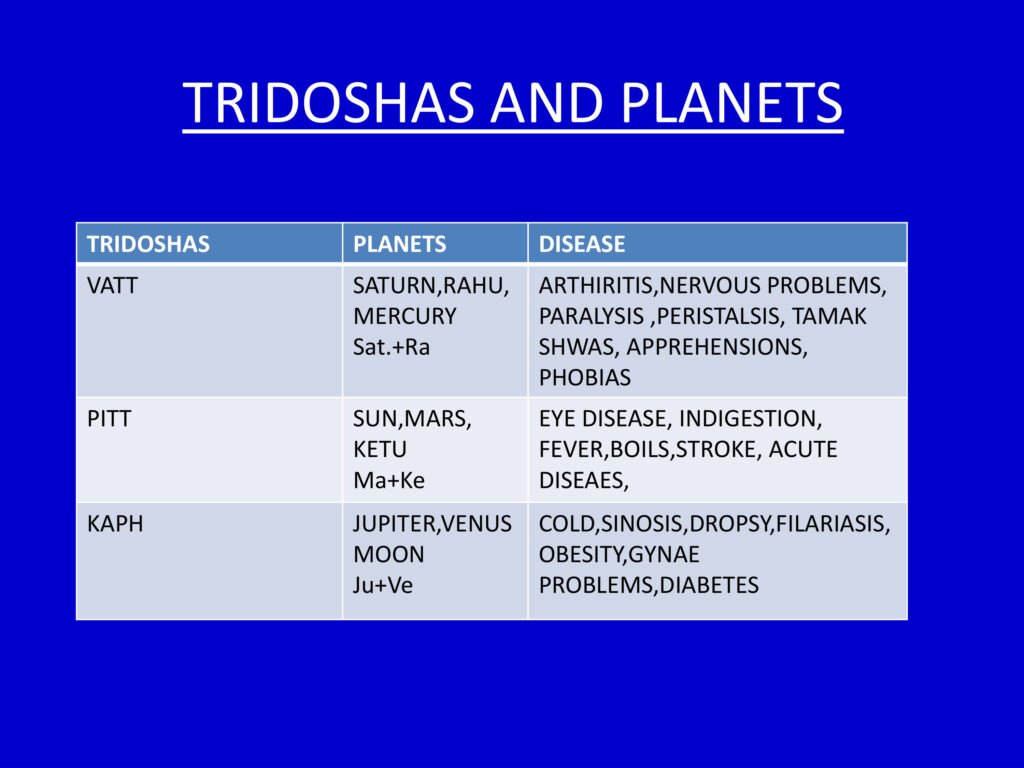
There are three physio-pathological factors that control the functioning of the body, also known as fundamental biological energies derived from the five elements (space, air, fire, water, earth) that govern physical, mental and emotional health. Vata manages movement, Pitta controls metabolism, and Kapha provides structure, with optimal health achieved through balancing an individual’s unique, dominant dosha construction (Prakriti). So long as they remain in balance the health is maintained when they are corrupted, they become pathological agents and create disease by corrupting the tissues (Dhatus) of the body.
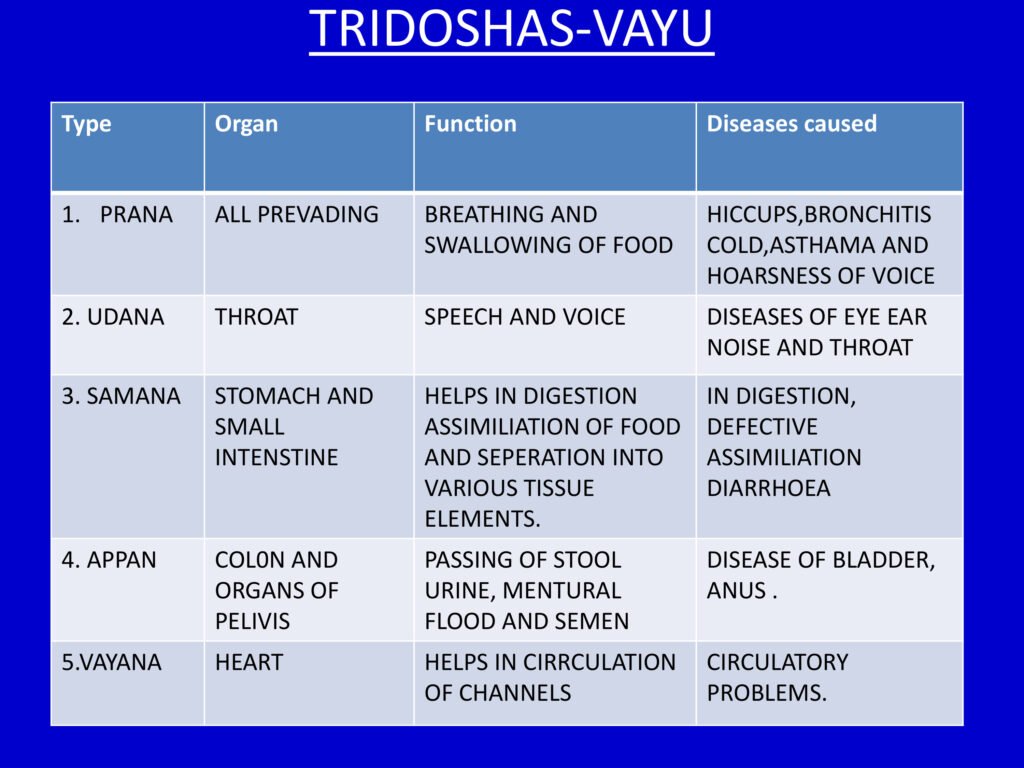
Five types of Vata (air+ether), (the kinetic energy/ nervous system) their seat in the body, respective function and disease caused by it.
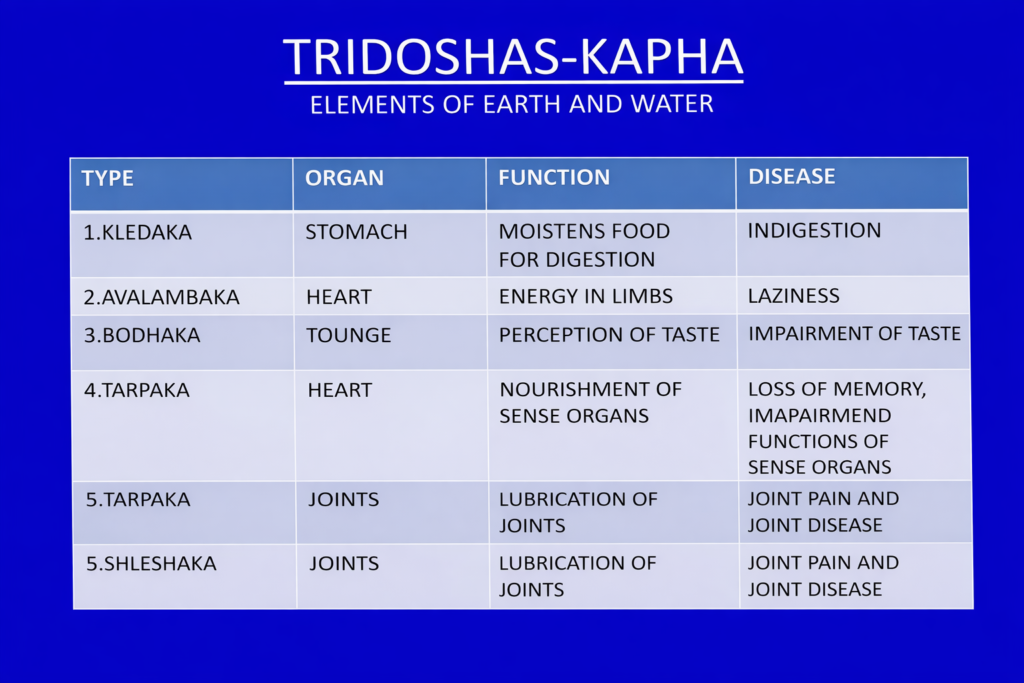
Five types of Kapha (water+earth), (the structure/anabolic energy their seat in the body, respective function and disease caused by it.
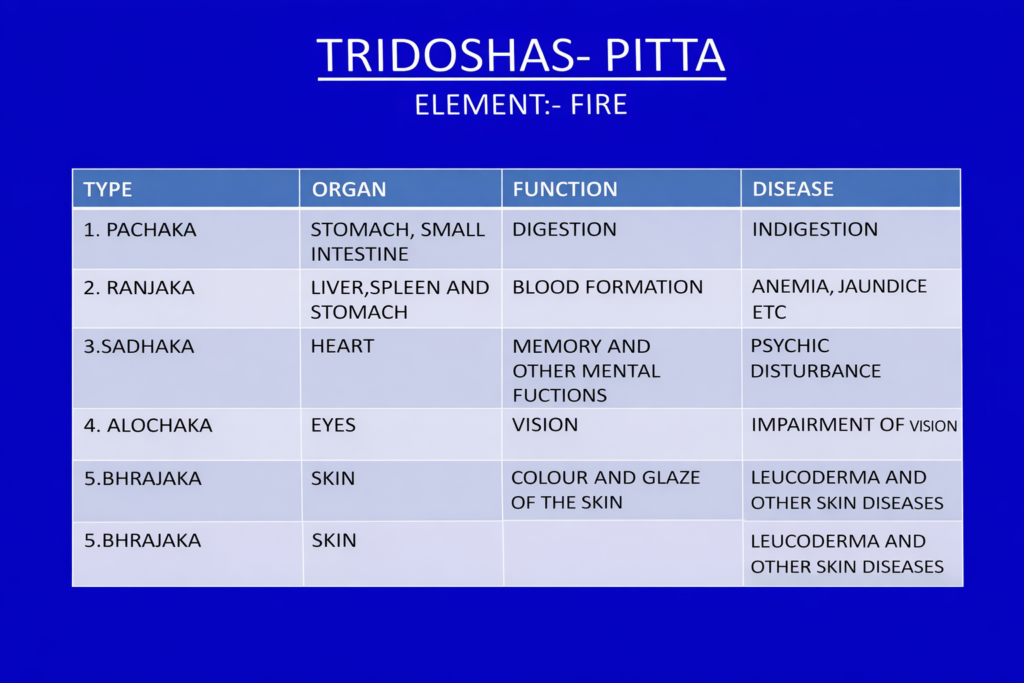
Five types of Pitta (fire+water), (the metabolic/biochemical energy) their seat in the body, respective function and disease caused by it.
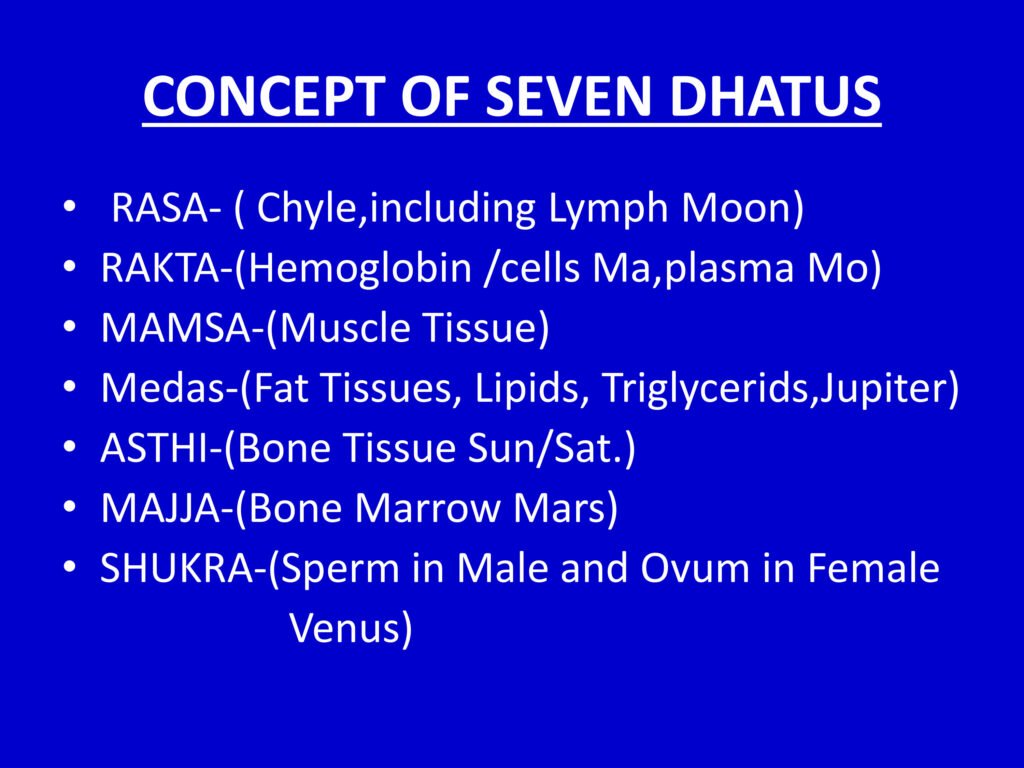
The whole body is held together and functions through seven Dhatus (seven essential body tissues). They are fundamental body tissues that sustain physical structure, function, and immunity: Rasa (plasma/lymph), Rakta (blood), Mamsa (muscle), and Shukra (reproductive tissue).
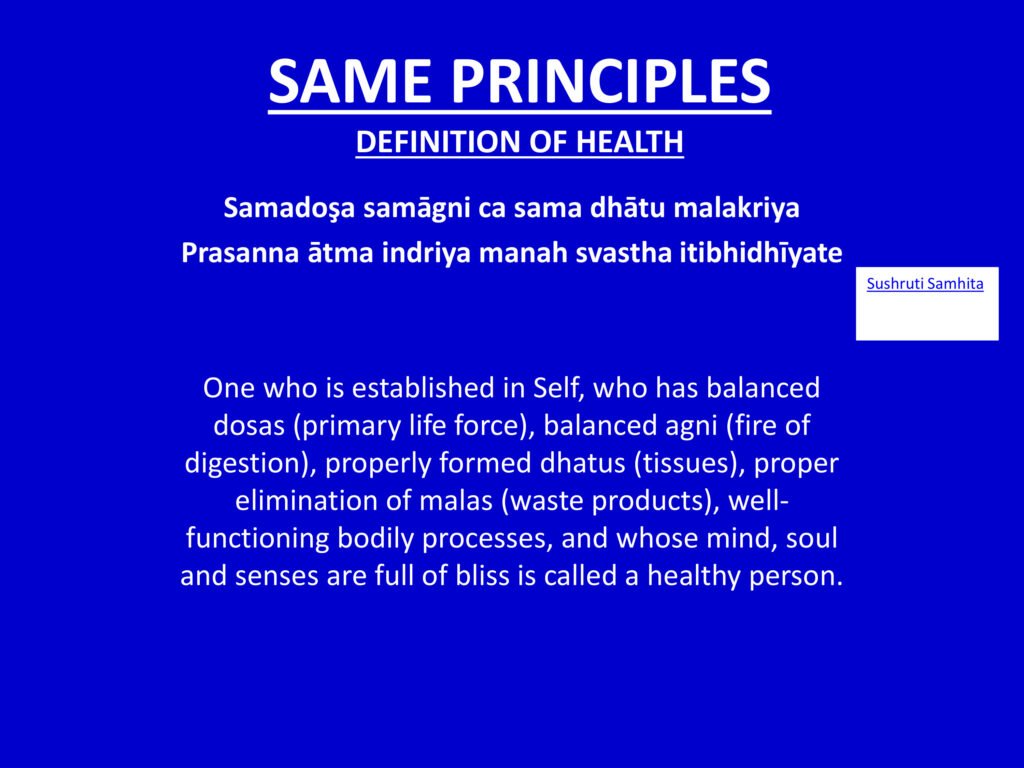
As five basic elements, three gunas (attributes) three doshas (biological energies) and seven dhatus (supporting tissues of the body) all work in tandem. Based on this fact Ayurveda gave the complete definition of the health in 6th century B.C. by Sushrut and exponent of surgery in Ayurveda.